

Menopause and your skin: what changes, and what can you do?

 min. reading time
In this article
Drier. More sensitive. Less firm. During perimenopause and menopause, your skin may suddenly feel different.


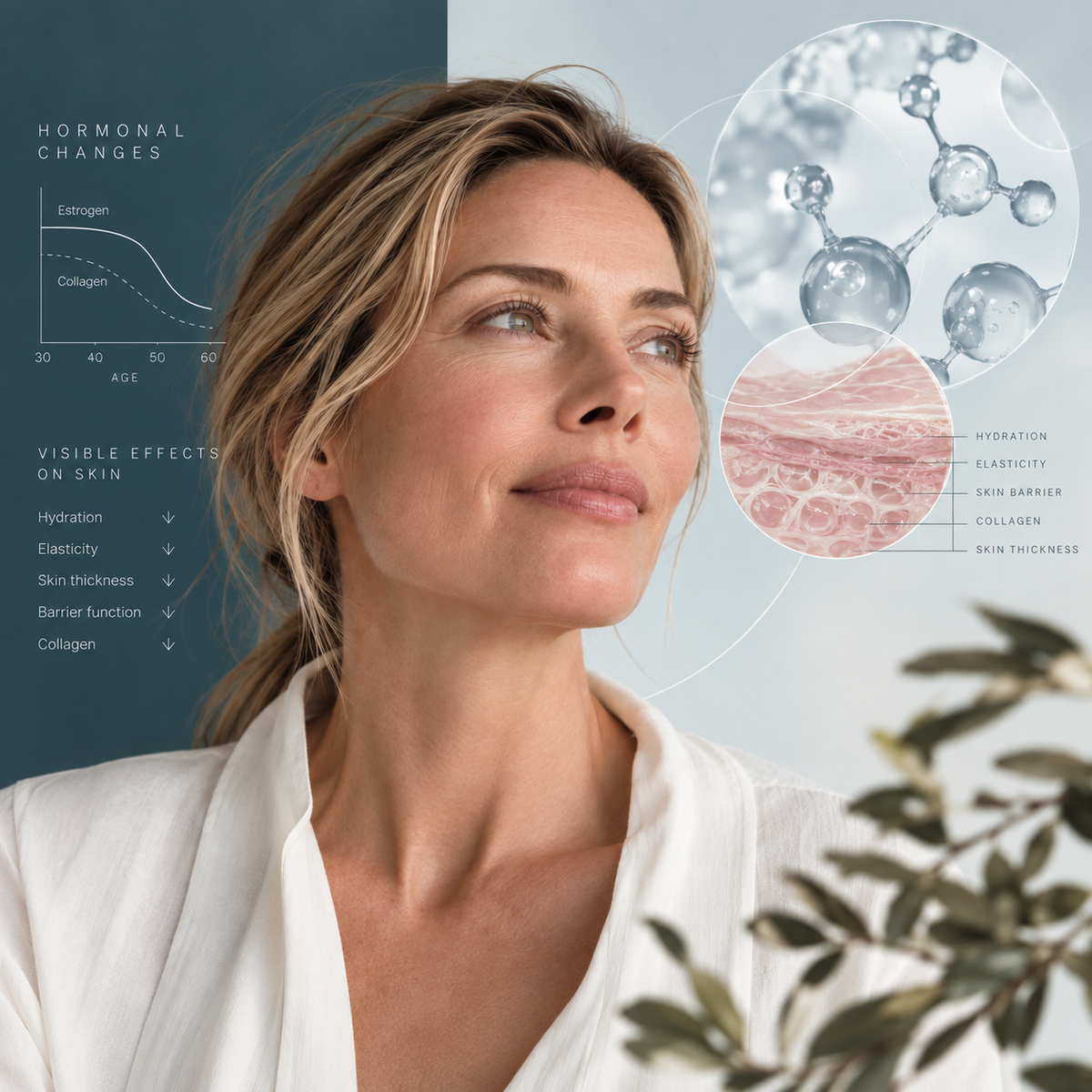
This is understandable. Hormones influence skin biology, and changes in oestrogen levels can affect collagen, hydration, elasticity and skin thickness.
But hormones are only part of the picture.
The Sarasin SkinLongevity 360° Method takes a broader view: your daily routine, the role of professional skin treatments, and how internal factors and lifestyle relate to healthy ageing.
What is perimenopause?
Perimenopause is the transition around menopause when hormone levels begin to change. It can last several years and is different for everyone.
Menopause is defined as 12 consecutive months without a menstrual period, when there is no other physiological or medical cause.
How does menopause affect your skin?
Oestrogen plays an important role in several processes within the skin.
Scientific studies and reviews associate falling oestrogen levels around menopause with changes in:
- Collagen
- Elasticity
- Hydration
- Skin thickness
- Barrier function
As a result, skin may feel drier or less firm, and fine lines may become more noticeable.
Why can skin become drier during menopause?
Scientific literature links declining oestrogen levels with reduced skin moisture and changes in skin structure.
A routine that used to work well may therefore no longer meet your skin's needs during perimenopause or menopause.
For drier menopausal skin, the American Academy of Dermatology recommends gentle cleansing, moisturising and daily sun protection, among other measures.
Do you lose collagen during menopause?
Yes. Hormonal changes during menopause are associated with changes in the skin's collagen content.
Collagen is an important structural protein that contributes to skin firmness and structure. Scientific reviews describe links between oestrogen loss and changes in collagen, skin thickness and elasticity.
There is an important nuance: skin ageing is influenced by more than hormones and age. This is where SkinLongevity begins.
SkinLongevity: a 360° approach to healthy ageing
Why does skin age differently from one person to another?
Genetics and chronological age play a role, but researchers are also increasingly studying the skin ageing exposome: the environmental and lifestyle factors that influence how skin ages.
Research describes a major role for UV radiation in photoageing and links pollution with skin ageing. Stress and insufficient sleep may also be associated with processes that affect the extracellular matrix, including collagen.
This scientific perspective reflects Sarasin's approach to SkinLongevity: looking at the whole picture, beyond an individual wrinkle, dark spot or patch of dry skin.
The Sarasin SkinLongevity 360° Method
01. At Home: what you do every day matters
A consistent skincare routine can help maintain hydration, support the skin barrier and protect against external stressors.
Hydration and barrier support → Cellular Renewal Cream
Skin structure and protection against oxidative stress → Cellular Renewal Serum
Daily UV protection → Tinted Sunscreen SPF50 (formerly Forever Young SPF50)
02. In Clinic: skincare is one part of the picture
Professional skin treatments can complement your routine when you have specific goals relating to skin quality, texture, pigmentation or firmness.
The right treatment depends on your skin, age, medical history and personal goals.
03. From Within
Your skin is connected to the rest of your body.
Hormones, nutrition, stress, sleep and other lifestyle factors can influence biological processes that are also relevant to skin ageing.
SkinLongevity therefore goes beyond what is in your bathroom cabinet. This does not mean that a single supplement, food or lifestyle change can stop skin ageing.
What science increasingly shows is that skin ageing has multiple causes.
Discover our Skin Longevity Method →
At Home. In Clinic. From Within.